

Low Pressure Die Casting Systems
Low Pressure Die Casting Machines
High Metallurgical Quality and Precise Forming
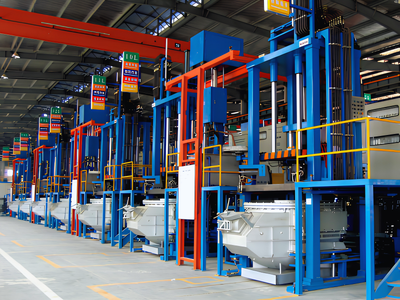
Low pressure die casting (LPDC) technology works on the principle of transferring molten metal upwards from a closed holding furnace through a riser pipe into the mold with the help of low air pressure. Compared to gravity casting, this method allows for a much more controlled, turbulence-free, and bottom-up filling of the metal. The result is high-density parts with excellent sealing performance and no gas voids (porosity).
Precise Pressure Control and Maximum Efficiency
Our machines feature advanced PLC control systems that manage pressure with millibar-level precision throughout the casting cycle. This precise control optimizes the metal's entry rate into the mold, ensuring continuous feeding during cooling and thus eliminating shrinkage defects.
Advantages of Low-Pressure Die Casting Machines
Key features that make this technology stand out in high-end casting projects:
Superior Material Density: The metal's filling and solidification within the mold under pressure prevents the formation of microscopic voids in the part's internal structure, ensuring maximum mechanical strength.
High Raw Material Efficiency: Metal recycling rates are reduced and material savings are achieved because the need for traditional gating and feeding systems is minimized.
Flawless Surface and Internal Structure: Thanks to bottom-up filling, the liquid metal has minimal contact with air; this reduces the risk of oxidation and gas entrapment to virtually zero.
Automatic Temperature and Pressure Management: The metal temperature in the holding furnace and the applied pressure curve are continuously monitored, ensuring the same high quality standard in every casting.
Ideal for Complex Geometries: For parts with thin walls and detailed designs, the pressure force ensures flawless filling right to the edges of the mold.
Advanced Cooling Systems: Multi-zone (water/air) cooling lines on the mold optimize solidification time, increasing cycle speed.
Main Application Areas
Automotive: Production of aluminum wheels (most common use), cylinder heads, chassis parts, and complex engine components.
Defense and Aerospace: Critical fuselage components requiring high security and sealing.
Energy: Sealed switchyard equipment for high-voltage transmission lines.